Early career education significantly lifts women's workforce participation to 54.6% and cuts youth disengagement to 16%: Antarang Foundation study
Apr 27, 2026
VMPL
Mumbai (Maharashtra) [India], April 27: At a time when 25 percent of young Indians aged 15-29 are not in education, employment or training (Periodic Labour Force Survey, 2025), new findings from Antarang Foundation's longitudinal study reveal that structured career education can significantly improve youth outcomes - reducing disengagement, increasing workforce participation, and driving long-term economic mobility. This study is among the first of its kind in India.
Tracking 1,057 alumni from 2015 - 2025, the study offers rare, evidence-based insight into how early and sustained career education shapes trajectories from school to employment.
When measured against national benchmarks from the Periodic Labour Force Survey (2024 and 2025) and the India Employment Report (2024), the study found:
- Youth disengagement (NEET) reduced to 16 percent, compared to 25 percent nationally
- Women's workforce participation at 54.6 percent, significantly higher than approximately 35 percent nationally
- 51.7 percent of alumni in formal salaried roles, compared to approximately 22 percent nationally
- 69.1 percent in full-time employment, significantly higher than national benchmarks
- Participants report average annual earnings of ₹2.4 lakh within the first year of employment, rising to ₹2.6 lakh over time - reflecting a 39.2 percent increase in individual income
- 42.1 percent increase in household income, indicating broader economic upliftment
These results are achieved with an average per-student investment of approximately ₹4,000. Together, they position career education as a critical, yet underleveraged, intervention in addressing India's youth employment challenge.
Unlike short-term skilling programmes, this study tracks long-term progression - from early career awareness in school to employment, income growth, and career stability - offering a comprehensive understanding of sustained outcomes.
"For decades, our education system has focussed on skilling alone as the primary route to employment," said Priya Agrawal, Founder and Director, Antarang Foundation. "Our experience has shown that an upstream intervention of career education embedded as part of secondary school curriculum changes that. When young people are given the tools to understand their abilities, explore real opportunities, and make informed choices as part of secondary school, the outcomes are fundamentally different - young adults enter career pathways that give them better incomes and social mobility. Entire families gain, and industry gains a diverse talent pool."
Nearly 31 percent of participants secure employment within six months, while 75 percent achieve key career milestones, including employment, higher education, and skill certification - demonstrating both speed and effectiveness of intervention.
"Career counselling is critical because students often make decisions based on marks and what their friends are doing rather than awareness of opportunities," said Mr Chandrakant Shinde, State Nodal Officer and NEP Coordinator, Secondary Education, Goa SCERT. "When students are guided to understand their strengths, aspirations and future pathways, they are able to make more informed and meaningful choices."
"In today's context, students need structured guidance to translate their aspirations into real career pathways," said Peeyush Kumar Jain, Division Head (Division 6), SCERT Rajasthan. "Career counselling helps young people understand their abilities, evaluate opportunities, and make decisions that align with both their potential and the evolving job market."
Findings from the study suggest that when youth are equipped early with career awareness, decision-making tools, and exposure to real-world opportunities, they are able to make informed choices, transition efficiently into the workforce, and achieve stronger alignment between aspiration and opportunity.
The most significant gains are seen in female workforce participation, underscoring the role of career education in advancing gender equity.
Gayatri Hingorani, General Manager - Corporate Communications, Bharat Bijlee Limited, said: "Bharat Bijlee's four-year CSR collaboration with Antarang in low-resourced schools across Mumbai and Thane, reflects our focus on creating lasting impact in the Education and Livelihood sectors. Their strong alumni engagement enables partners like us to better understand long-term outcomes of their CareerAware program. Equally noteworthy is their work with State Education Boards to institutionalise career awareness, especially given the varying stages of adoption across states."
Board Member Kavita Nair said: "With education and employment continuing to operate in silos, young people are often left navigating critical decisions without alignment or guidance. Career education offers a way to bridge this gap - but only if institutions, employers and families engage collectively. Samagam reinforces that this is not an isolated intervention, but a systemic shift that must be scaled with intent."
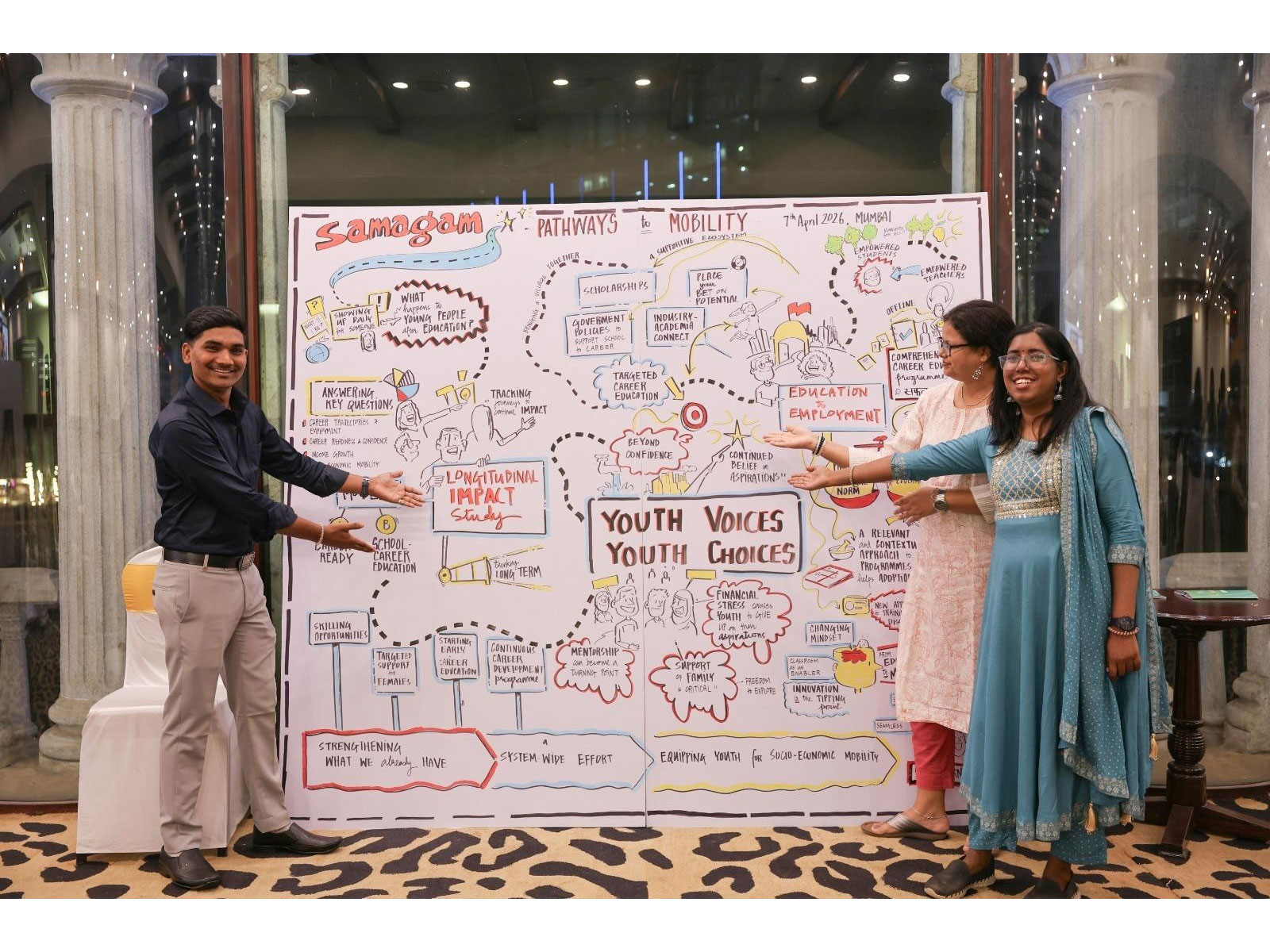
The findings were presented at Samagam 2026 - Pathways to Mobility, Antarang Foundation's annual convening bringing together policymakers, educators, donors, employers, and community stakeholders to reflect on advancing youth socio-economic mobility. The evening was attended by key members of government:
- Chandrakant Shinde, NEP Coordinator, Goa SCERT
- Dipali Jogdande, Assistant Professor, VGPG, SCERT Maharashtra
- Kelika Kenye, Samagra Shiksha, Nagaland
- Peeyush Kumar Jain, Division Head (Division 6), SCERT Rajasthan
- Dr Navneet Sharma, Assistant Professor and State Coordinator - Career Guidance, SCERT Rajasthan
The convening also saw participation from leading philanthropic and ecosystem partners, including Rekha Koita (Koita Foundation) and Prasad Baji (Social Venture Partners, Mumbai).
As India continues to grapple with the challenge of translating its demographic advantage into meaningful employment, the study highlights a critical gap - not of job creation alone, but of bridging the awareness gap and enabling young people to navigate available pathways effectively.
With early evidence now established, the next phase of Antarang's work will focus on helping state governments implement the mandate of school-based comprehensive career education, strengthening industry linkages, and building sustained alumni support systems.
If India is to fully realise its demographic dividend, the question is no longer whether career education matters - but how quickly it can be scaled.
About Antarang Foundation
Antarang Foundation is a Mumbai-based non-profit organisation working to bridge the gap between education and employment by enabling informed career transitions for young people. Over the past decade, Antarang has reached more than 500,000+ youth across 1,400+ schools, working closely with 5 state governments, delivering structured career education at scale.
(ADVERTORIAL DISCLAIMER: The above press release has been provided by VMPL. ANI will not be responsible in any way for the content of the same.)