A New-Age PGDM for Future Business Leaders: Inside Badruka School of Management
Oct 31, 2026
VMPL
New Delhi [India], October 31: The business world is dealing with the challenge of artificial intelligence (AI) and management education is adapting to it by giving greater attention to the needs of professionals who can master the business world and blend in all the technological aspects, problem-solving skills, and analytical skills. One of the most important factors that managers need to consider in selecting a course is to find one that will connect what has been learned in the classroom with the realities of being a business manager.
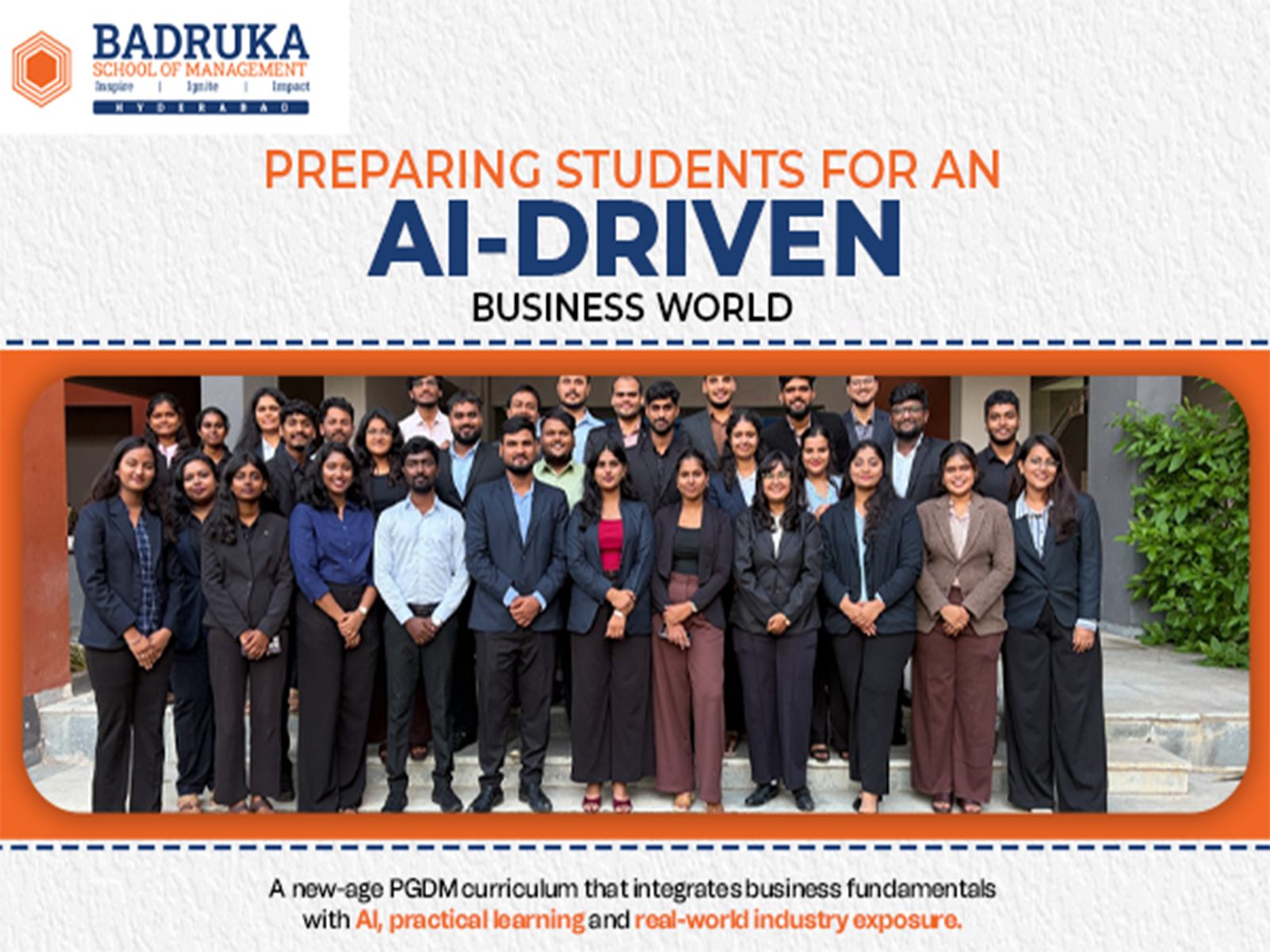
This new trend is being set by Badruka School of Management (BSM), Hyderabad with the launch of its two-year full time residential Post Graduate Diploma in Management (PGDM). The approved programme includes important management courses and AI-related learning, industry exposure, practical projects and electives, preparing students for a changing business world.
Technology in the management education stream
An integral part of BSM's PGDM is the use of technology in management learning. Some of the courses offered are what many people refer to as the "soft" courses: artificial intelligence and machine learning for managers, finance, marketing, strategy, entrepreneurship, and data courses.
The aim is to make students aware of the impact of technology on business decisions not as a technical subject but as a broader subject as it can impact on other functions as well. Managers increasingly rely on data, digital platforms and data-driven AI-powered tools, and it is crucial that they understand the business applications and limitations of these tools.
Prompt engineering, design thinking, problem solving/decision making are also part of BSM's curriculum. These courses support the functional management courses and attempt to teach students how to think analytically about the problems they face, how to present their ideas verbally and how to compare various solutions.
Strategically planned teaching using blocks
The BSM approach to subject content is through block teaching that means the subjects are delivered in blocks of time rather than spread out across the usual timetable across the term.The institute actually mentions six trimesters of two-week each duration in their curriculum information.
The structure allows the learner to focus on an area, develop their understanding of concepts and to investigate these practically through assignments and practical outputs. Students are not required to change the subject every day but take a series of intensive learning sessions related to a specific field within management.
Specific qualifications in the career area of interest
PGDM programme provides a platform to the students to build their expertise on an area of the students' interests in their profession. BSM are the 7 specialisation areas: finance, marketing & strategy, human resource management, operations & supply chain management, business analytics & entrepreneurship.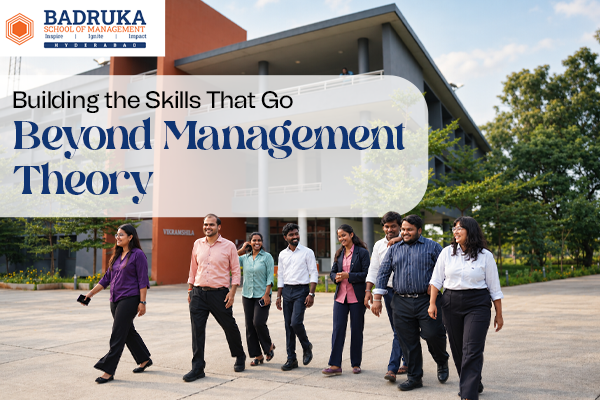
They include different aspects of business, from financial planning and customer engagement to efficiency, business development and business creation. The curriculum offers the students the opportunity to learn the basics of management and then attend elective courses in selected areas.
A wide range can contribute to the student's insight into the relationships between business functions, as well as to the strengthening of the knowledge in their special fields. In thinking about data and decision-making, for instance, a finance person can complement an analytics person, and in the case of customer needs and competitive positioning, a marketing person can complement a strategy person.
Teacher has taken the initiative to learn from industry practitioners
Another ingredient of BSM's learning approach is the expertise of the faculty. The institute hones its academic prowess with industry expertise and pursuits.
BSM's published faculty profiles feature professionals who have experience in product strategy, data science, innovation and entrepreneurship and more. They can be used to give students exposure to the perspectives of organisations in the process of solving problems, assessing opportunities and making decisions in a changing market.
Industry involvement is also reflected in applied learning. This programme involves the use of case study, real-time corporate and social projects, and engagement with professionals. To enable students to solve real world issues, interact with other students and create solutions that can be assessed outside of theoretical learning.
Developing adaptable and responsible leaders
The training required in management today should not be only practical. Another important trait that successful business leaders will require is good communication skills, the ability to work with others and making effective decisions in the face of risk. In areas such as these, BSM helps address the needs of learners by offering courses in essential skills and perspectives: business communication, presentation and storytelling, persuasive writing, business ethics, and managing self and others.
The programme is suitable for students intending to pursue a future career in business management, as it provides an opportunity to gain an understanding of several business disciplines as well as specializing in a specific area and gaining practical skills. The focus on applied learning and industry engagement is a new approach for management education and helps to prepare management graduates not only to understand management but to also play a role in addressing the challenges faced by organisations.
(ADVERTORIAL DISCLAIMER: The above press release has been provided by VMPL. ANI will not be responsible in any way for the content of the same.)