When the Sarangi Sang for Freedom: Ustad Sabri Khan's "Vande Mataram"
Aug 03, 2026
VMPL
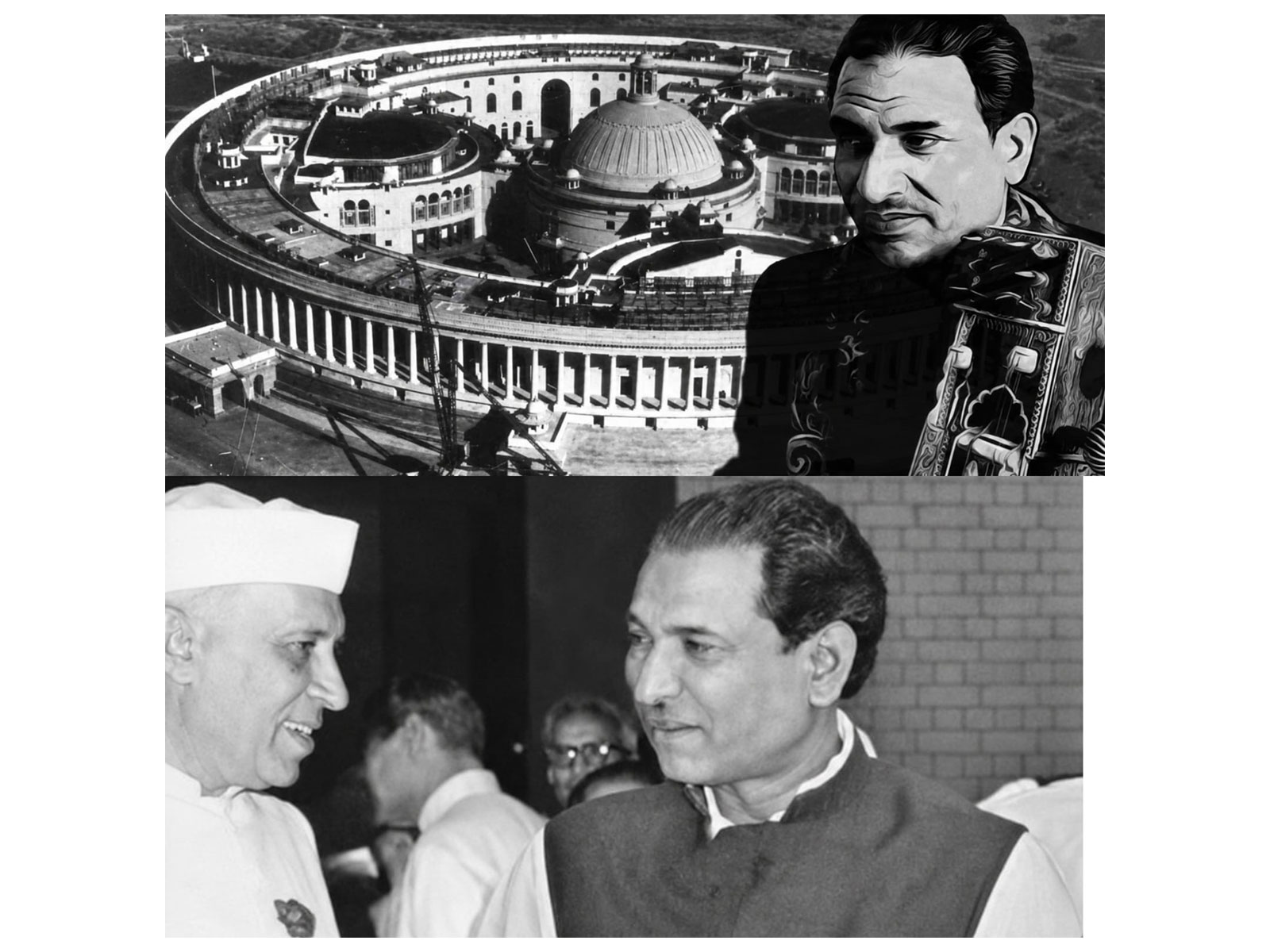
New Delhi [India], August 3: India's journey to independence was not merely a political movement - it was a profound cultural awakening that united millions through a shared vision of freedom, identity, and nationhood. Music played a transformative role in this awakening, inspiring generations with melodies that transcended barriers of language, region, and religion. Among the artists who helped shape this cultural legacy was the legendary Sarangi maestro Ustad Sabri Khan , whose evocative rendition of Vande Mataram remains a shining testament to the power of music to embody the spirit of a nation.
Revered as Aaftab-e-Sarangi ("The Sun of the Sarangi"), Ustad Sabri Khan belonged to the illustrious Moradabad Gharana and devoted his life to elevating the Sarangi from its traditional role as an accompanying instrument to one capable of expressing the deepest emotions of the human soul. Through his extraordinary artistry, he demonstrated that the Sarangi could sing, weep, celebrate, and inspire with unmatched eloquence.
During the years following India's independence, as the nation embraced its newfound freedom and sought to define its cultural identity, Ustad Sabri Khan's instrumental interpretation of Vande Mataram carried profound emotional significance. Composed by Bankim Chandra Chattopadhyay, Vande Mataram had become one of the defining symbols of India's freedom movement, inspiring countless freedom fighters with its stirring tribute to the motherland.
When these immortal words were translated into the voice of the Sarangi, the composition acquired an extraordinary emotional dimension. Through every graceful bow stroke and every subtle ornamentation, Ustad Sabri Khan transformed the patriotic hymn into a deeply moving musical experience that resonated with the hopes, sacrifices, and aspirations of an emerging nation.
His rendition was far more than a performance--it was an offering of devotion to India itself. The expressive voice of the Sarangi conveyed reverence, pride, resilience, and hope with remarkable sensitivity. Audiences were captivated not only by the technical brilliance of his musicianship but by the profound emotional connection he forged between music and patriotism. His interpretation demonstrated that music possesses a universal language capable of expressing collective emotions where words alone often fall short.
Throughout his distinguished career, Ustad Sabri Khan became one of the foremost ambassadors of Indian classical music. Performing across Europe, North America, Asia, the Middle East, and beyond, he introduced international audiences to the remarkable expressive capabilities of the Sarangi and the richness of the Hindustani classical tradition. His artistry earned widespread acclaim and numerous honours, yet despite his global recognition, he remained deeply rooted in India's cultural heritage, always using music as a means of preserving and celebrating its timeless traditions.
Today, the legacy of Ustad Sabri Khan continues to flourish through successive generations of the Sabri family.
His son, Ustad Kamal Sabri , an internationally acclaimed Sarangi virtuoso and seventh-generation representative of the Moradabad Gharana, has carried this extraordinary heritage into the twenty-first century. While remaining firmly grounded in tradition, he has expanded the artistic possibilities of the Sarangi through innovation, cross-cultural collaboration, composition, and education.
Recognized worldwide for his virtuosity and artistic vision, Ustad Kamal Sabri has performed at some of the world's most prestigious concert halls and festivals, collaborating with distinguished musicians across classical, jazz, world, and contemporary music traditions. His contributions have earned him numerous international honours, including an Honorary Doctorate and the Global Iconic Artist Award .
Beyond the concert stage, Ustad Kamal Sabri has become a passionate advocate for the preservation and advancement of the Sarangi. Through performances, masterclasses, educational initiatives, and scholarly collaborations, he continues to promote the instrument as a universal voice capable of building bridges between cultures and generations. His efforts have also contributed to the historic establishment of formal academic programmes in Sarangi Studies, ensuring that future generations can continue to learn, preserve, and advance this remarkable tradition.
The eighth generation of the Sabri family is already emerging through the promising talents of Abdul Ahad Sabri and Asad Sabri , grandsons of the legendary Ustad Sabri Khan. As young torchbearers of one of India's most distinguished musical lineages, they represent the future of the Sarangi.
Growing up in an environment shaped by centuries of musical wisdom, they have inherited not only technical mastery but also a deep appreciation for the cultural, spiritual, and philosophical values embedded within Indian classical music. As they continue their artistic journey under the guidance of Ustad Kamal Sabri, they embody the continuity of a living tradition that has endured for generations while remaining relevant to contemporary audiences.
The story of Ustad Sabri Khan's rendition of Vande Mataram is therefore much more than a historical anecdote. It reminds us of music's extraordinary ability to inspire patriotism, preserve cultural memory, and unite people across every social and cultural divide. His performance stands as a lasting symbol of the vital role artists played in shaping India's national consciousness during one of the most significant chapters of its history.
Today, as the Sarangi continues to captivate audiences around the world through the artistry of Ustad Kamal Sabri and the rising talents of Abdul Ahad Sabri and Asad Sabri, the spirit of that unforgettable performance lives on. The strings that once echoed the aspirations of a newly independent nation continue to resonate across generations, reminding us that freedom, heritage, and music remain inseparable threads in the fabric of India's cultural identity.
When Ustad Sabri Khan performed Vande Mataram, it was not merely a patriotic composition that was heard--it was the voice of a nation, expressed through the timeless soul of the Sarangi.
(ADVERTORIAL DISCLAIMER: The above press release has been provided by VMPL. ANI will not be responsible in any way for the content of the same.)