Chandigarh University Hosts 'Urban Symphony 2026' Showcasing Innovative Strategies for Future-Ready India @2047
Apr 01, 2026
NewsVoir
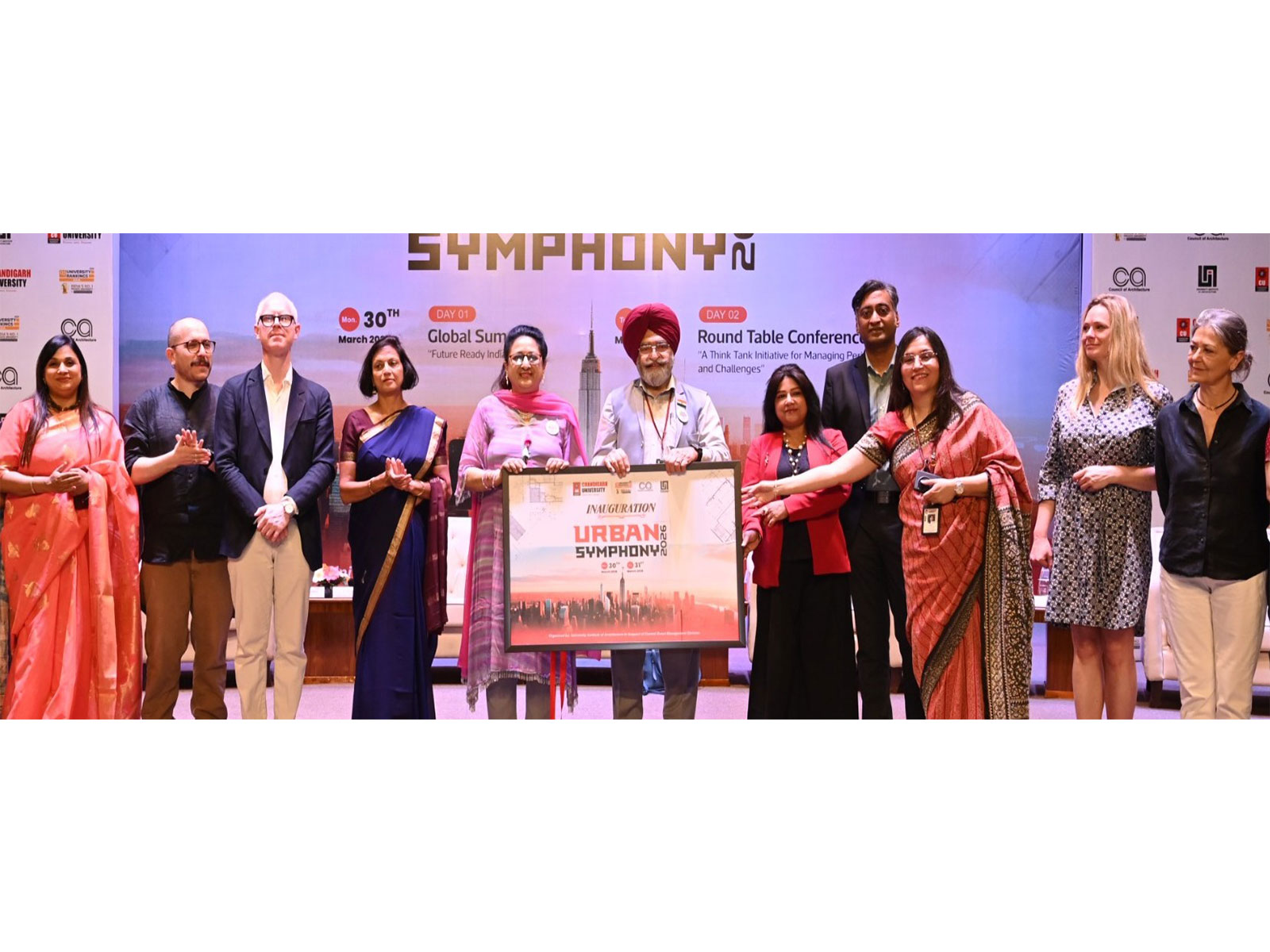
Chandigarh [India], April 1: Chandigarh University (CU) hosted Urban Symphony 2026, a two-day academic and professional conclave featuring "Global Summit: Future Ready India @2047" and the "Round Table Conference" bringing together eminent architects, urban planners, experts, policymakers, researchers, academicians and industry leaders to explore innovative strategies, interdisciplinary research, and progressive policy frameworks for building resilient, sustainable, and future-ready urban environments.
Urban Symphony 2026, which kicked off with the inauguration of 'Global Summit: Future Ready India @2047", was graced by dignitaries including Chief Guest Dr Namrita Kalsi, Chief Architect, HMRTC (Delhi), Dr Karan Avtar Singh, former Chief Secretary, Punjab, Guest Of Honour Dr Shikha Jain Director DRONAH (Development and Research Organization for Nature, Arts, and Heritage), Vertica Dvivedi, Entrepreneur & Founder, The Wade Asia, Prof (Dr) Dorota Kamrowska Zaluska, Department of Urban Design and Regional Planning, Gdansk University of Technology (Poland), Prof (Dr) Eliana Cangelli, Sapienza University of Rome (Italy) , Manmohan Khanna, Chairman- IIID & IIA Chandigarh, Prof (Dr) Valerio Font- Sapienza University of Rome, Prof (Dr) Michele Conteduca, Sapienza University of Rome, SD Sharma, Principal Architect in SD Sharma & Associates, Chandigarh University Vice Chancellor Raviraja N Seetharam, Pro Vice Chancellor VR Raghuveer and Dr Prabhjot Kaur, Director, IEE Lifts Pvt. Ltd.
Chandigarh University Vice Chancellor Raviraja N Seetharam said, "On inaugural day of the 'Urban Symphony 2026', the 'Global Summit: Future Ready India @2047' brought together global experts to deliberate on resilient urban systems, sustainable infrastructure, heritage-sensitive development and future-oriented planning frameworks. The 'Round Table Conference', a Think Tank initiative for managing Peri urban growth and challenges bridged academia and professional practice, encouraged thematic deliberations, facilitated policy-practice dialogue and generated action-oriented outcomes on deliberate on the future of cities,".
"Under the studio-based research project conducted by students of the University Institute of Architecture at Chandigarh University, a discussion was held on the changing spatial dynamics along the NH-05 and Bharatmala Road (NH205A) corridor during the 'Round Table Conference'. This round-table concluded with a resolution that a full impact assessment should be part and parcel of any development program to achieve sustainable, inclusive and coordinated urban development. The outcomes of discussions during the 'Urban Symphony 2026' would contribute to ongoing policy discussion and inform future planning frameworks for peri-urban development in India," he added.
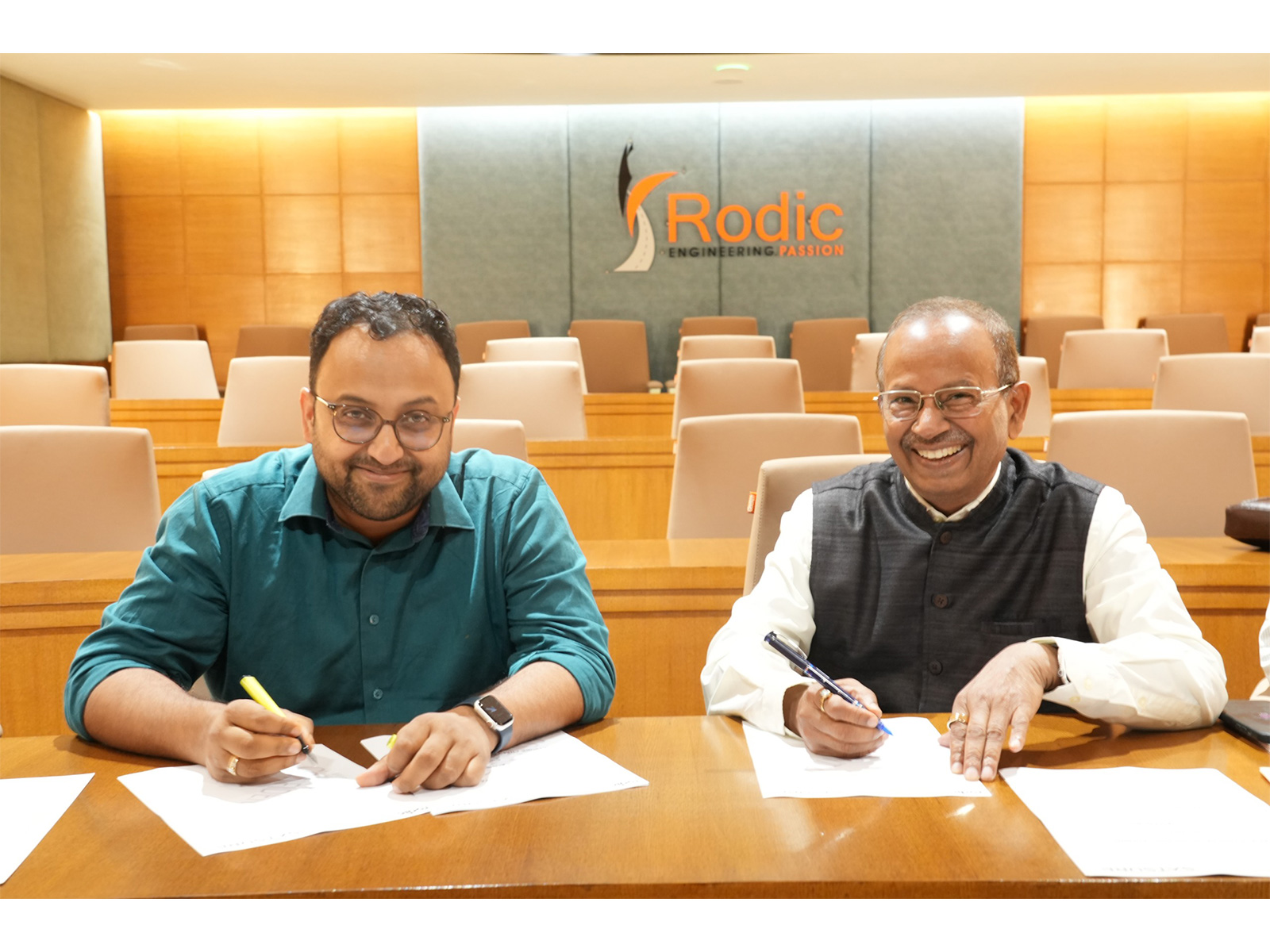
During Urban Symphony 2026, a MoU was signed by Chandigarh University with the Network of People of Construction (NPC) to bridge the industry academia gap by facilitating industry exposure, internship opportunities, skill development opportunities , mentorship opportunity in form of expert lectures and workshops for CU students.
Earlier in her keynote address, Namrita Kalsi, Chief Architect, Haryana Mass Rapid Transport Corporation Ltd (Gurugram Metro Rail Limited) gave a detailed presentation on the challenges faced by urban planners during projects like Metro Rail. "Metro is no longer a single infrastructure project. It actually becomes a city development project when you are working on the road. The successful implementation of projects on the roads of the city requires coordination and cooperation with the different city authorities which is an extremely difficult task. So, if you are working on the road, there is a number of utilities like gas pipeline, sewerage line, water line ad most importantly the data cables passing through the road. You have to literally find out who is the owner of each utility, then settle it, make a provision for moving it which is again a very difficult task because they also have the statutory norms which have to be followed. It is outstanding to contribute to improving urban infrastructure for people."
Dr Karan Avtar Singh, former Chief Secretary, Punjab said, "Since big projects in an area transform the economy in an area but such projects will become viable for the government if a taxation scheme is introduced who come to such an area after five to ten years later. Such people should pay a betterment charge. So this is common in many living systems across the globe. It's called a betterment levy or a betterment charge where a highway or new expressway is built. Everybody along this expressway, especially at the exit points, make huge profits and that land which was Rs 10 lakhs per acre become Rs 10 crore per acre in the 10 years. Those people should pay something to the government and the government should then re-compensate the expenditure incurred in first two years of such a project with interest rate."
Dr Eliana Cangelli, Professor of Architectural Technology and Environmental Design at Sapienza University of Rome, said, "Cities need to create more inclusive, accessible and resilient urban environment by responding to major challenges of our time like climate change, social and spatial inequalities, housing fragilities. For this reason, urban design cannot be limited to government. In this scenario, the role of architects becomes fundamental. We are called not only to design places, but also to interpret complexity, mediate between different scale and actors, and contribute to forms of transformation that are about spatial but also social. An architect must not act as only a designers of the built environment but also as critical thinkers and agents of change of the cities."
Prof (Dr) Dorota Kamrowska Zaluska, Department of Urban Design and Regional Planning, Gdansk University of Technology (Poland) said, "AI-based tools are presenting new opportunities for architects by making available large volumes of data for shaping contemporary urban environment. The paradigm thing which we want to achieve is sustainability, resilience, equity. So this is only the tool which can help us to achieve. AI based tools can enable us to respond to the current challenges such as climate change and adaptation and natural disasters. So we can analyse the data really to see what is happening the whole year."
Dr Shikha Jain Director DRONAH (Development and Research Organization for Nature, Arts, and Heritage) said, "Cities like Jaipur which was designed in the 18th century and Chandigarh which was designed in the in the 1960s as population in these cities has increased in many times than they were planned for. And one of the most challenging aspect of this is that because of increasing urbanization, we are actually eating up the natural resources which were part of the planning in these historic cities. There is a huge potential of looking at our historic cities, integrating the planning back with the natural resources, some of them are which are being misused because of increasing urbanization, learning from our past and making these cities more sustainable."
Chandigarh University
Chandigarh University is a NAAC A+ Grade University and QS World Ranked University. This autonomous educational institution is approved by UGC and is located near Chandigarh in the state of Punjab. It is the youngest university in India and the only private university in Punjab to be honoured with A+ Grade by NAAC (National Assessment and Accreditation Council). CU offers more than 109 UG and PG programs in the field of engineering, management, pharmacy, law, architecture, journalism, animation, hotel management, commerce, and others. It has been awarded as The University with Best Placements by WCRC.
Website address: www.cuchd.in.
(ADVERTORIAL DISCLAIMER: The above press release has been provided by NewsVoir. ANI will not be responsible in any way for the content of the same.)