2026: The 'New Normal' for Global Climate
Jan 02, 2026
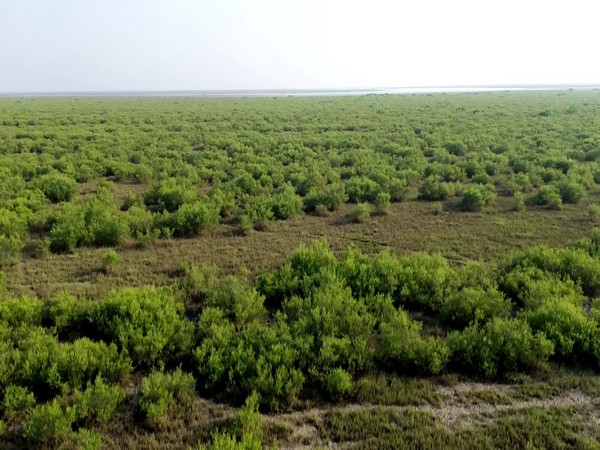
Washington [US], January 2: The continuous increase in global average temperatures exceeding thresholds shows that climate change has become a real problem, forcing countries to readjust their development and adaptation strategies.
Prolonged hot weather has become the "new normal".
The latest forecasts suggest that 2026 is likely to remain among the hottest years on record, reflecting an increasingly clear and irreversible trend of global warming .
According to the UK Met Office , the average global temperature in 2026 is estimated to be about 1.46°C higher than pre-industrial levels (1850-1900), with a range of 1.34°C - 1.58°C. If this scenario occurs, it will be the fourth consecutive year that global temperatures have exceeded 1.4°C - a level that was considered unattainable just a few years ago.
Professor Adam Scaife, who leads the Met Office's global climate forecasting research team, stated: "Before this surge, global temperatures had never exceeded 1.3°C. Maintaining levels above 1.4°C for many consecutive years indicates that the climate system is entering a new state."
Dr. Nick Dunstone, who is in charge of developing the forecast scenarios, said that the fact that 2024 will be the first time a temporary temperature increase exceeding 1.5°C is no longer an exception, but is becoming a clear warning sign about the rate of global warming.
The increase in widespread extreme heatwaves is seen as a direct consequence of global warming, as greenhouse gases continue to accumulate and trap heat in the atmosphere, according to The Guardian .
In this context, the last 10 years have all been among the top 10 hottest years on record, reflecting a systemic warming trend rather than a short-term fluctuation. Dunstone argues that this development shows the world is approaching the 1.5°C target of the Paris Agreement faster than expected.
Many scientists warn that the Earth's natural " carbon sinks "-such as forests, wetlands, and oceans-are showing signs of weakening. The reduced ability of these ecosystems to absorb carbon will accelerate the accumulation of greenhouse gases in the atmosphere, creating a negative feedback loop for global climate change, according to a report by ABN AMRO Bank (Netherlands).
The Arctic is a prime example of climate change happening faster than predicted. According to the US National Oceanic and Atmospheric Administration (NOAA), the period from October 2024 to September 2025 will see the highest temperatures in 125 years of modern observation in the region, with the last 10 years being the hottest in Arctic history. The region is warming four times faster than the global average, distorting its role as the "world's refrigerator" that helps regulate the planet's climate, according to The Guardian .
NOAA's annual report shows that the maximum sea ice area in 2025 will be the lowest in 47 years of satellite data. The oldest and thickest ice sheet has shrunk by more than 95% compared to the 1980s. Arctic rainfall has also reached record levels, while snow cover in June 2025 will be only half of what it was six decades ago.
These changes not only affect local ecosystems but also create global ripple effects, from rising sea levels due to melting ice to disruptions in weather systems and food supply chains. Despite its geographical remoteness, the Arctic is becoming the epicenter of global climate risks over the next decade.
A difficult problem for nations.
Prolonged heatwaves, widespread wildfires, and extreme rainfall are placing increasing pressure on the adaptive capacity of many countries, particularly developing economies and vulnerable island nations. With climate risks no longer merely predictive but clearly evident, the international community is expected to foster more effective cooperation mechanisms to bridge the gap between climate science and policy action.
The COP30 conference, to be held in Belem, Brazil, in November 2025, is seen as a crucial test for the global climate governance system, according to Reuters. The conference results show some progress, particularly in the area of adaptation finance, with countries agreeing to triple resources allocated to support adaptation in the coming years. Accordingly, approximately $120 billion per year is directed towards programs protecting vulnerable communities, forests, and key ecosystems.
However, this figure is still significantly lower than the long-term target of $300 billion per year for climate finance. Observers suggest that the gap between actual needs and current commitments reflects the structural constraints of the global climate negotiation process, where economic interests, development demands, and geopolitical disagreements continue to dominate key decisions.
The biggest gap in COP30 remains the lack of a clear roadmap for the gradual reduction and eventual elimination of fossil fuels. While many countries supported the development of a global energy transition plan, the final agreement did not provide a specific timeline or binding monitoring mechanisms. The weak role or absence of some major economies further undermined the overall message of energy transition.
Against this backdrop, according to Reuters, a separate climate summit scheduled for April 2026 is expected to generate more substantive progress before the results are returned to the COP process. The combination of mechanisms such as the Just Transition Mechanism (JTM) and voluntary alliances is opening up the possibility of forming a "complementary engine" for global climate governance, allowing countries willing to act to move faster while maintaining principles of fairness and inclusiveness.
Parallel to the COP process, 2026 also marks a significant turning point in global ocean governance, as the United Nations High Seas Treaty (BBNJ) officially comes into effect after exceeding the necessary ratification threshold. This treaty aims to protect 30% of international waters through the establishment of marine protected areas, whereas currently only about 1% of waters outside national jurisdiction are protected, according to Earth.Org .
In addition to expanding marine protected areas, the BBNJ treaty requires that all economic activities at sea, including deep-sea mineral extraction, undergo environmental impact assessments. Simultaneously, the document emphasizes benefit sharing, technology transfer, and capacity building for developing countries, thereby contributing to narrowing inequalities in global marine resource governance.
However, experts warn that new legal frameworks can only be effective if they are implemented quickly, transparently, and linked to stable financial resources.
Meanwhile, popular strategies such as carbon offsetting or net-zero emissions commitments, while playing a role to some extent, are still insufficient to address the root causes of the climate crisis without substantial reductions in fossil fuel use, according to the French climate technology company Greenly.
Source: Thanh Nien Newspaper