



























Behind transatlantic productivity gap lies a technology gap
Nov 22, 2026
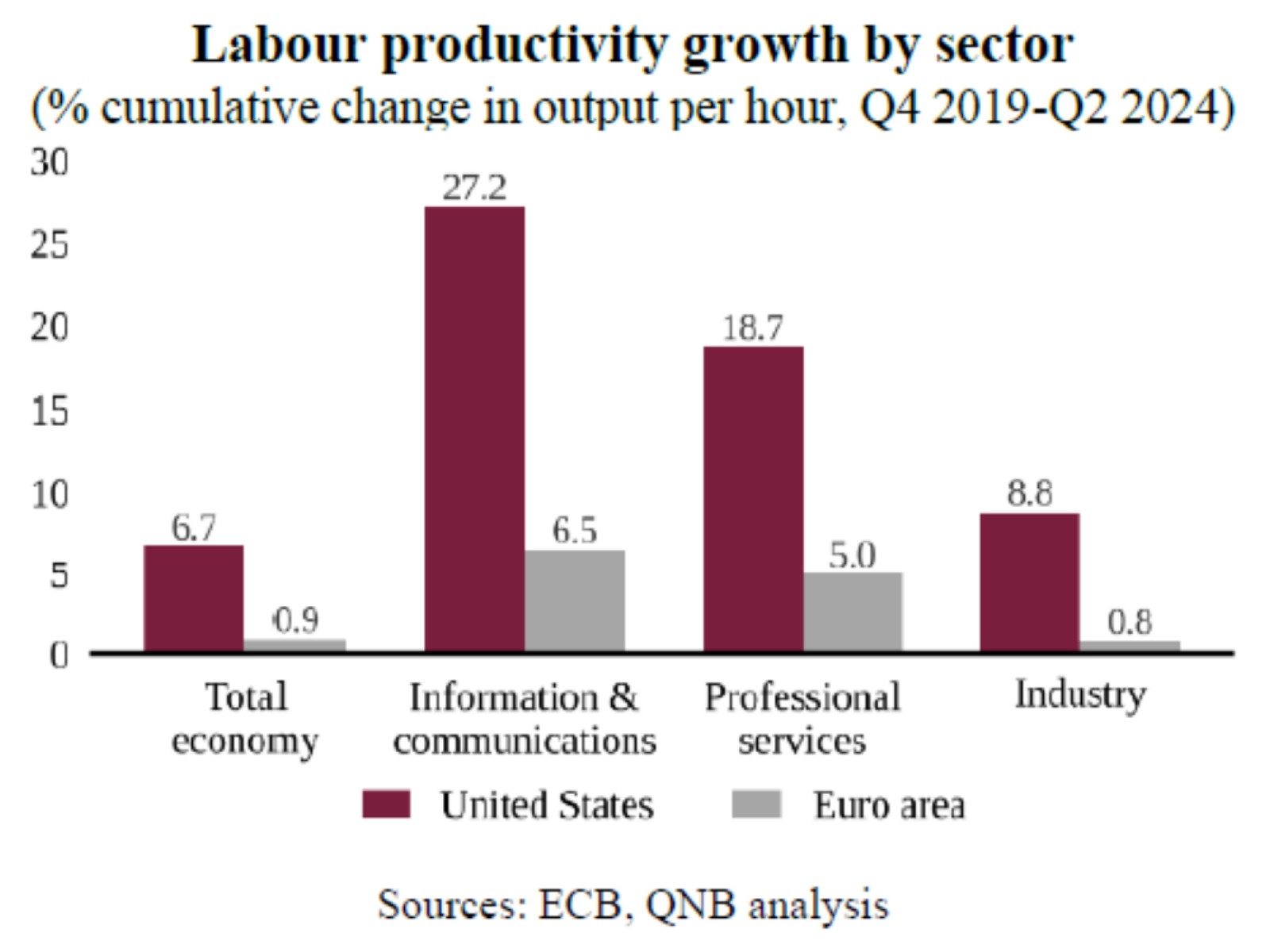
Washington [US], November 22: For much of the period after the Second World War, Europe steadily caught up with the United States on productivity, meaning how much an economy produces for a given amount of work. The catch-up was remarkable: European labour productivity converged from 22% of the US level in 1945 to 95% in 1995. Since peaking in the mid-1990s, however, the trend has reversed. According to the OECD, productivity in the 27 member countries of the European Union (EU) moved from roughly 90% of the US level in 2000 to 75% in 2024, and the gap widened further in 2024 as US productivity rose 2.2%, its second consecutive year of growth. These comparisons use output per hour worked, the preferred measure among economists, which captures how much value an hour of work produces. This measure is not distorted by the fact that employees in Europe tend to work fewer hours than in the US, partly because there are more paid holidays, the typical working week of a full-time employee is shorter and there is a larger share of part-time workers.